Rebuilding is the biggest decision a chimney ever forces, and it's the one Chimney Moncton exists for: connecting homeowners with insured partner masons who rebuild chimneys week in, week out — and who will tell you honestly whether you need the roofline-up partial at $2,000–$5,000 or the full rebuild at $3,000–$10,000+.
When repair isn't enough
There's a clean line between a chimney that can be repaired and one that has to be rebuilt, and it runs through the brick itself. Repointing replaces mortar; it assumes the bricks between the joints are still structurally sound. Once Moncton's freeze-thaw cycles have spalled the brick faces off — exposing the soft, porous core — those bricks absorb water like a sponge and shed a little more of themselves every winter. No mortar job saves a spalled brick. It has to come out, and when whole courses are spalled, the section comes down.
The other rebuild triggers a mason looks for:
- Cracking that runs through bricks, not just along joints — a sign of movement or a shattered flue, not surface wear
- Lean or separation — a stack drifting off plumb or pulling away from the house wall (if this is your situation, start with our leaning chimney page — the cause may be below grade)
- A destroyed crown that has let water saturate the core for years, so the damage is inside the stack, not just on its face
- Shattered clay flue tiles visible from the top — often paired with a rebuild-plus-stainless-liner scope
- A failed WETT report citing deteriorated masonry the inspector won't pass with cosmetic work
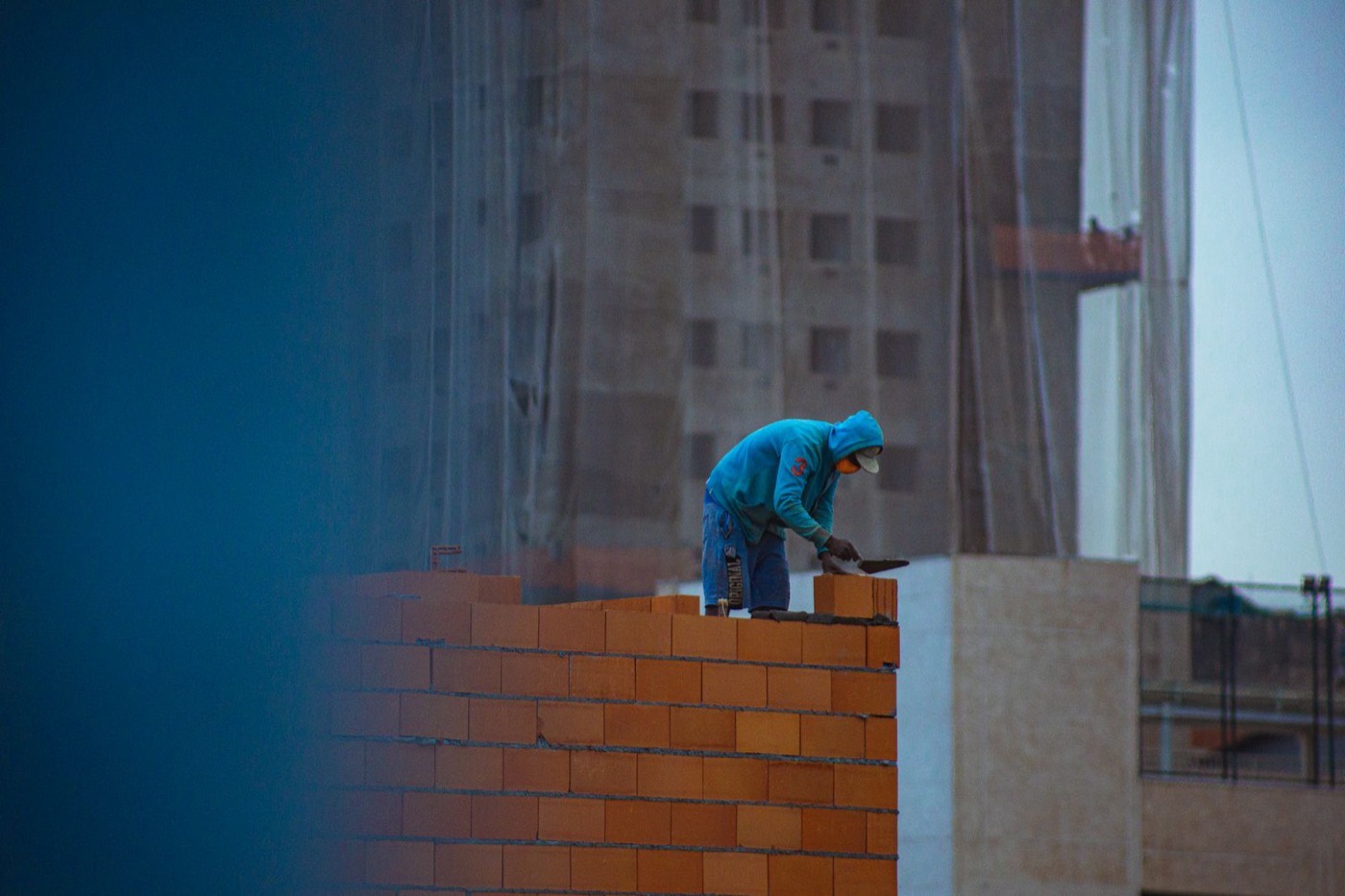
The partial rebuild — from the roofline up
This is the workhorse job in Greater Moncton, typically $2,000–$5,000. Chimneys fail from the top down for a simple reason: the portion above the roof is the only masonry on the house exposed on all four faces to wind-driven rain, salt air and the full swing of every freeze-thaw cycle, with no attic or wall cavity moderating the temperature. It's also where a failed crown feeds water directly into the core. The enclosed chimney below the roof deck can be decades younger, structurally speaking, than the stack above it.
The scope: staging or roof access goes up, the stack is dismantled course by course down to sound, well-bonded masonry — sometimes that's at the flashing line, sometimes a few courses below the visible damage. Sound original bricks are salvaged where possible, matched brick fills the gaps, and the stack is relaid with properly tooled joints. On top goes what most Moncton chimneys never had: a cast concrete crown, sloped to shed water, overhanging with a drip edge, with a bond break around the flue tile so thermal expansion doesn't crack it — plus a stainless cap to keep rain, snow and wildlife out of the flue. Step and counter-flashing are redone so the roofline joint doesn't become the next leak.
The full rebuild
When deterioration, cracking or lean continues below the roofline, rebuilding only the top means setting new masonry on a failing base. A full rebuild — typically $3,000–$10,000+ depending on height, access, brick and how many flues the stack carries — takes the chimney down to solid structure (in the worst cases, to the footing) and rebuilds it to current standards: correct flue sizing for the appliance it serves, required clearances to combustibles, and the standard height rule of thumb — the flue terminating at least 3 feet above the roof penetration and 2 feet above anything within 10 feet.
For price context: Toronto contractors publish $8,000–$15,000 for full rebuilds; Moncton pricing generally lands below big-city rates, and the cost page breaks down what moves a job within the range — height and stories, scaffold versus lift access, single versus multi-flue, and brick selection.
Brick matching — the part that shows forever
A rebuilt chimney is visible from the street for the life of the house, and buyers notice a mismatched stripe of shiny new brick. Partner masons handle it in order of preference: salvage and relay the sound originals (the outer face of an old brick is its hardest, most weathered surface — reusing it preserves the look); source reclaimed brick of the same era and size — older Maritime brick often runs slightly different dimensions than modern metric production, so size-matching matters as much as colour; or spec a current brick matched on colour range and texture. The mortar gets the same care — tinted to match and tooled to the original joint profile — because a perfect brick match with bright grey joints still reads as a patch.
Rebuild and liner in one mobilization
If the flue tiles are cracked — and on a chimney bad enough to rebuild, they usually are — the smart sequence is to install the stainless steel liner while the top of the stack is open. One mobilization, one staging setup, and the finished chimney is sound outside and in: exactly what a WETT re-inspection or a buyer's home inspector wants to see. The WETT & insurance page covers how the completed, documented rebuild closes an insurer's file.
The other option nobody quotes: taking it down
Worth naming, because it's sometimes the right answer. If the chimney serves nothing — the oil furnace is gone, no wood appliance, no plans for one — removing the stack below the roofline and closing the roof can cost less than rebuilding a structure with no job. The trade-offs: you lose the option of ever adding a wood stove on that flue (which in wood-heat New Brunswick has real value), and any remaining appliance venting must be rerouted. A partner mason will quote both directions when removal is genuinely on the table; what they won't do is rebuild a chimney you don't need without telling you.
Timing matters in this climate. Rebuild season runs roughly May through October — mortar won't cure properly below freezing. A chimney flagged in fall should be quoted immediately and booked for the first spring slots, before the queue fills with everything winter broke. Deadline files — insurance conditions, closings — get scheduled first.