Drive Coverdale Road or the residential grids off Pine Glen and Whitepine and you can read Riverview's growth rings in its rooflines: bungalows, split-levels and side-splits from the 1960s through the 1980s, most crowned by the same feature — a central brick chimney that once served an oil furnace, often with a fireplace flue beside it. That chimney is why Chimney Moncton gives Riverview its own page: one housing era, one chimney design, one very predictable set of failures.
The anatomy of the Riverview chimney problem
A chimney built in 1972 has now stood through five decades of Greater Moncton freeze-thaw. Here's where that shows first on the classic bungalow stack:
- The crown was never cast. Builders of the era typically finished chimney tops with a trowel of mortar — a "crown" that cracks within a few winters and has usually been re-smeared several times since. Every crack feeds water into the core. A cast concrete crown with a drip edge ($500–$1,500 with a cap) is the single highest-value repair on these chimneys.
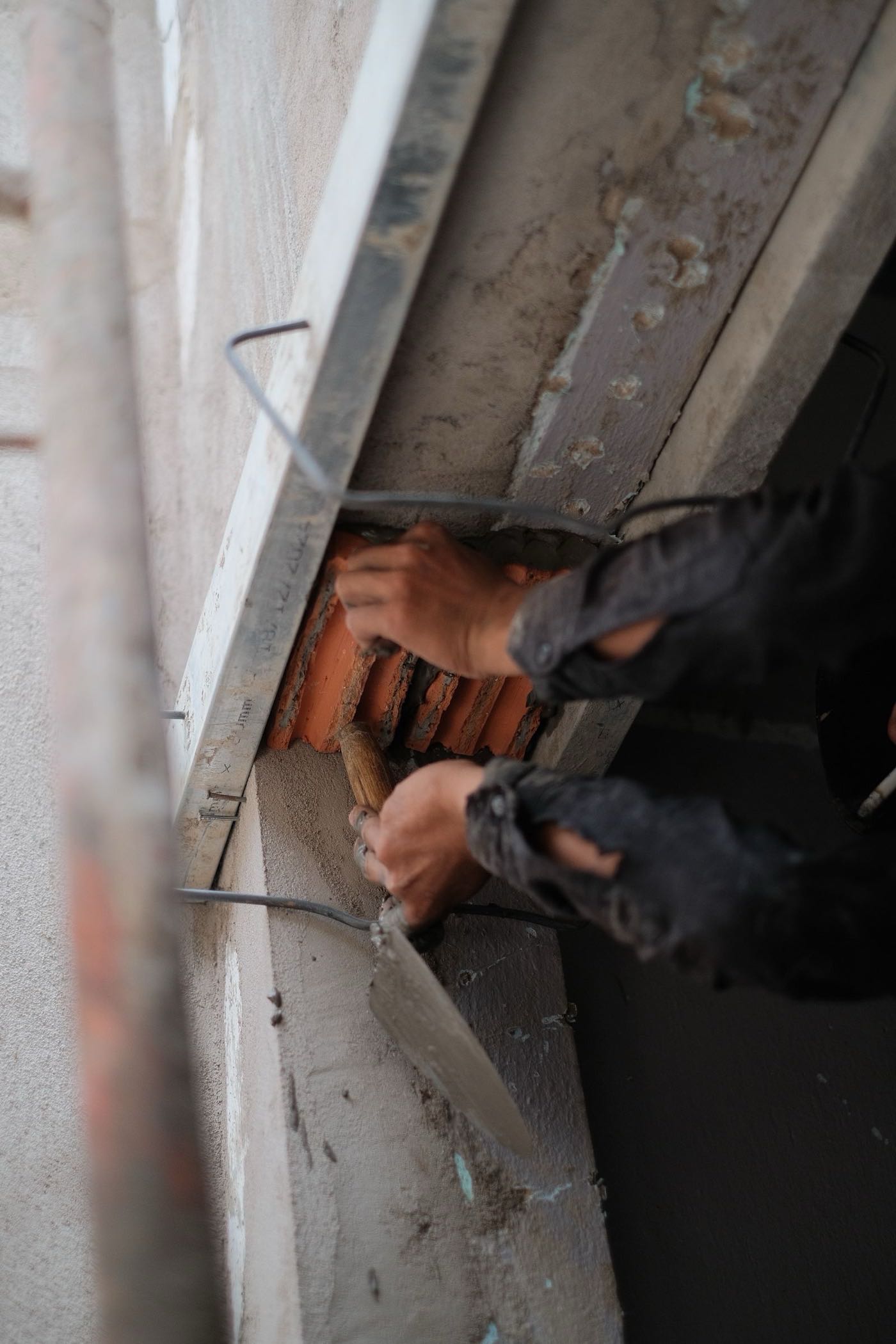
- Spalling concentrated above the roofline. The exposed courses shed their faces first — the orange flakes on the shingles are brick, not leaves. Caught early it's repointing and brick replacement at $1,000–$3,000; left for a decade it's a roofline-up rebuild at $2,000–$5,000.
- Original clay flue tiles at end of life. Fifty years of thermal cycling and — on the furnace flue — decades of acidic oil exhaust leave tiles cracked and mortar joints open, which is exactly what a flue camera or WETT inspection finds.
The conversion wave hit Riverview hard
Riverview's oil-furnace era is ending street by street as heat pumps go in — and every conversion changes the chimney's job description. Some stacks are left orphaned entirely: no exhaust, no warmth, condensation and frost working the masonry year-round, deteriorating faster in retirement than they did in service. Others keep one small appliance — a water heater venting alone into a flue sized for a furnace, condensing on every cycle. And in plenty of Riverview living rooms, a wood insert now breathes into the original open fireplace flue — oversized for the insert, slow-drafting, and packing itself with creosote.
All three configurations end at the same page: the stainless liner. A correctly sized, insulated 316 liner ($2,000–$4,500) fixes the draft, the condensation and the creosote — and it's the corrective a WETT inspection writes up when the insurance renewal or a home sale puts the system under a flashlight. Truly redundant stacks have a different honest answer: capping and venting, or removal below the roofline, both cheaper than maintaining a chimney with no job.
Family homes changing hands
Riverview is where Greater Moncton's family homes turn over — long-held bungalows moving from original owners to first-time buyers. Those transactions put a home inspector on the lawn with a camera, and the era's chimneys give them plenty to photograph. Whether you're the buyer holding the report or the seller preparing for it, the mechanics — quotes inside condition periods, winter-closing holdbacks, WETT timing — are on the buying & selling page, and every repair range is on the cost page.
One more era-specific note: on stacks this age, check the base as well as the top. A settled footing shows as a lean or a gap opening against the siding — a different problem from spalling, with a different fix, and worth ruling out while the assessment ladder is already up.
Riverview rule of thumb: if your neighbours' chimneys are getting worked on, yours is the same age. The houses went up together, the chimneys are failing together — and the owner who quotes early picks the repair rung; the one who waits gets assigned one.